Home
Home HSFUJI
  Mar 10,2026
What Really Determines the Price of a Small Home Elevator?
As residential design and living standards continue to evolve, small home elevators are becoming an increasingly popular solution for multi-story houses, duplex apartments, and modern villas.
One of the most common questions homeowners ask at the early stage is simple: How much does a small home elevator cost?
In reality, the price of a home elevator is not determined only by its size. The final cost is usually influenced by several practical factors, including installation conditions, system configuration, and customization requirements. Understanding these elements helps homeowners evaluate options more objectively and make confident decisions.
Why Small Home Elevators Are Becoming More Popular
For many families, installing a compact elevator is not only about convenience between floors. It is also about improving long-term living comfort and accessibility.
In households with elderly family members or children, elevators can make daily movement safer and easier. At the same time, they enhance the overall functionality and long-term value of the property.
In many modern housing projects today, a home elevator is gradually being viewed as part of a long-term lifestyle upgrade rather than simply a transportation device.
Key Factors That Influence the Cost of a Small Home Elevator
Building Structure and Installation Conditions
One of the most important factors affecting the cost of a home elevator is the building structure.
If the house was designed with a pre-reserved elevator shaft, installation is usually more straightforward and construction time is shorter. However, many existing homes were not originally planned with elevator installation in mind.
In these cases, an independent steel shaft or aluminum frame structure is often required. These structural solutions allow the elevator to be installed within limited space while maintaining safety and stability.
Drive System and Technical Configuration
The drive system is another major factor that influences the overall price.
In the residential elevator market today, traction drive systems are widely used due to their smooth operation, energy efficiency, and long-term reliability. Depending on the structure of the house and installation conditions, other drive solutions may also be selected to achieve more flexible installation.
Choosing the appropriate drive technology does not only affect the initial installation cost. It can also influence long-term maintenance requirements and operational efficiency.
Based on extensive experience in residential elevator projects, HSFUJI ELEVATOR focuses on matching the drive system to the specific structural conditions of each home, ensuring both practicality and long-term stability.
Custom Design and Interior Configuration
Modern home elevators are increasingly becoming part of interior design.
Many homeowners choose features such as panoramic glass structures, customized cabin finishes, or different door configurations to match the architectural style of the home.
These design elements can significantly enhance the visual integration of the elevator within the living space. Naturally, a higher level of customization may also influence the final project cost.
With proper planning during the design phase, homeowners can often achieve a good balance between aesthetics and budget.
Typical Price Range for a Small Home Elevator
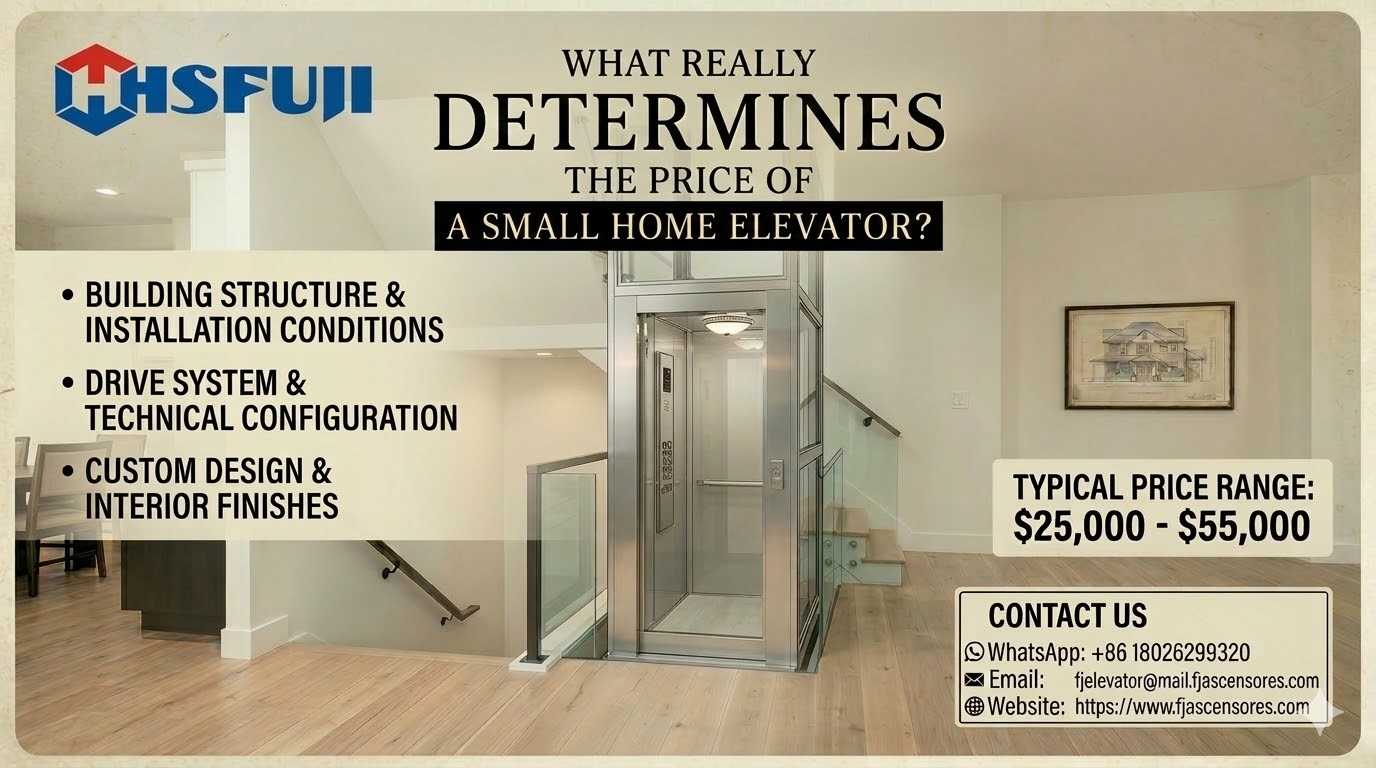
Although every project is different, in many residential installations the price of a small home elevator typically ranges between $25,000 and $55,000.
The final cost may vary depending on factors such as:
Installation environment
Whether a new shaft structure is required
Drive system selection
Cabin design and customization level
Because each home has unique structural conditions, a professional technical evaluation is usually necessary to determine the most suitable configuration.
Proper Planning Is the Key to Cost Control
When considering a home elevator, focusing only on the initial purchase price rarely leads to the best long-term solution.
A well-designed elevator system should balance installation feasibility, operational stability, and long-term maintenance efficiency.
With years of experience in residential elevator projects, HSFUJI ELEVATOR places strong emphasis on early technical assessment and system planning. By carefully analyzing the building structure and the homeowner’s needs, it is possible to design elevator solutions that are both reliable and cost-efficient.
For many families, this professional planning process is an important step toward achieving a safe, comfortable, and future-ready home.
 Cost of Installing a Home Elevator in an Existing House