Home
Home HSFUJI
  Mar 09,2026
Cost of Installing a Home Elevator in an Existing House
As residential layouts and lifestyles continue to evolve, more homeowners are considering installing home elevators in existing houses. For multi-story homes, a residential elevator not only improves daily convenience but also provides a safer and more comfortable way for family members to move between floors over the long term. Therefore, when planning a home upgrade, one of the first questions many homeowners ask is: how much does it cost to install a home elevator in an existing house?
Unlike new construction projects, adding an elevator to an existing home often requires a customized design based on the building structure. As a result, the overall budget can be influenced by several important factors.
Building Structure Is a Key Factor in Determining Cost
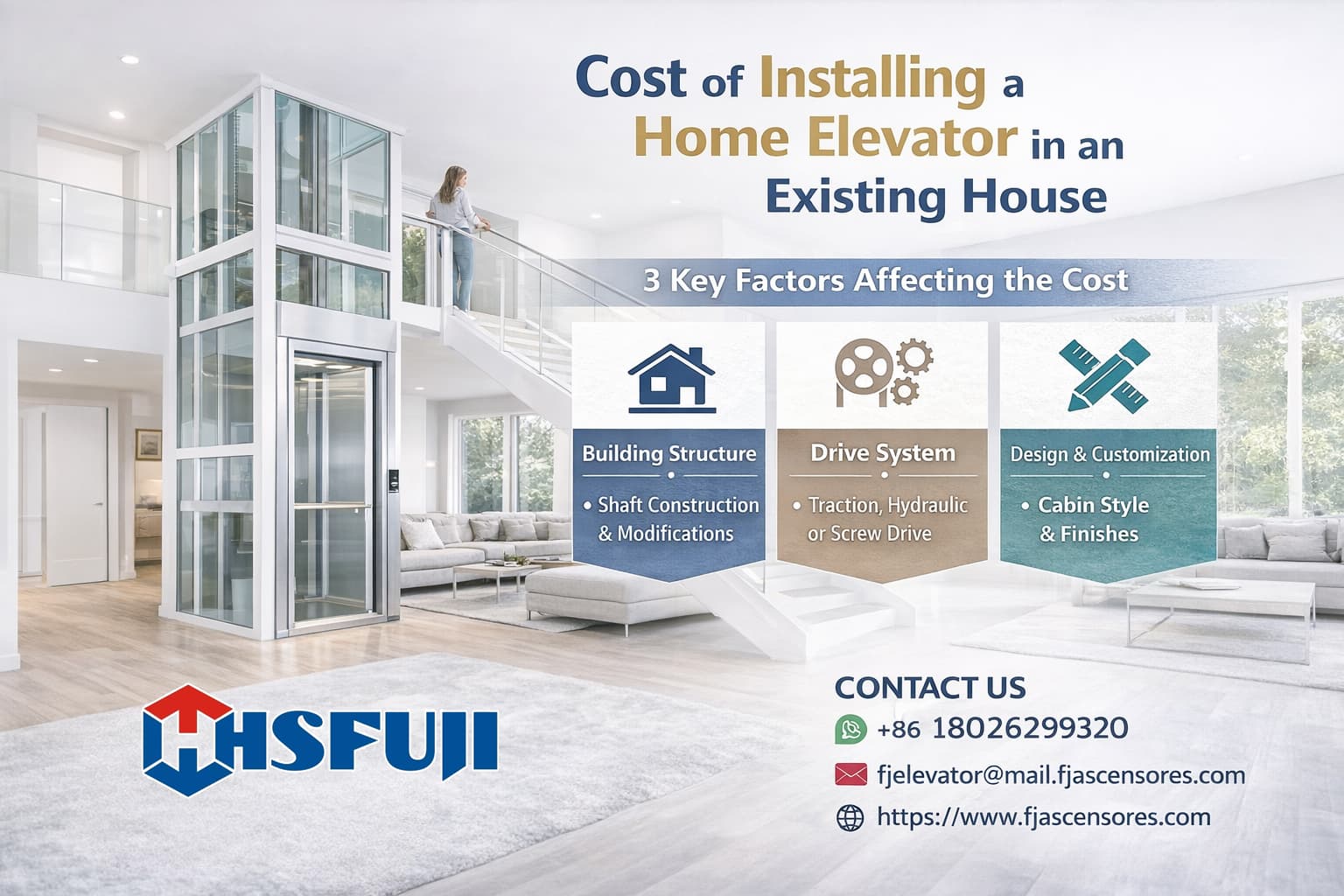
In most residential renovation projects, whether the building has a pre-reserved elevator shaft is one of the primary factors affecting installation costs. If the home was designed with a shaft in advance, the elevator installation is typically simpler and the construction period is shorter.
However, in many existing homes, an elevator shaft was not planned during the original construction. In such cases, it is often necessary to add an independent shaft structure, such as a steel structure shaft or an aluminum alloy frame shaft. Some projects may also involve floor openings or minor structural modifications.
Based on practical installation experience, these structural adjustments may increase the overall project budget to some extent. For this reason, conducting a detailed structural evaluation before installation can help homeowners better understand the total cost structure.
In many residential renovation projects, HSFUJI ELEVATOR conducts on-site measurements and technical assessments before providing a quotation to ensure the elevator solution matches the building structure properly.
The Choice of Drive System Also Affects the Overall Investment
In addition to structural conditions, the elevator drive system is another important factor influencing project cost. Different drive technologies vary in installation requirements, operating performance, and maintenance costs.
For example, traction home elevators have become one of the most common solutions for villa and residential installations due to their smooth operation, relatively low energy consumption, and stable maintenance requirements. In some cases where building conditions are more complex, other drive technologies may also be used to achieve a more flexible installation solution.
During the planning stage, selecting the right drive system can help control the initial installation cost while also reducing long-term maintenance expenses.
Custom Design and Space Configuration Can Also Impact the Budget
Modern home elevators are no longer just functional equipment; they are increasingly becoming part of the overall interior design of a home. Many homeowners consider the visual integration of the elevator with the surrounding space, such as choosing panoramic glass structures, customized cabin interiors, or different door styles.
These personalized design options can enhance the aesthetic appeal and overall quality of the living space, but they may also influence the project budget. For instance, a panoramic glass shaft or premium cabin decoration typically adds to the overall cost compared with standard configurations.
By planning these design elements carefully during the early stage, homeowners can often achieve a balance between aesthetic value and budget control.
A Typical Residential Renovation Example
In a typical home upgrade project, the homeowner planned to install a home elevator in an existing three-story residence to improve daily convenience for the family. However, the building did not include a pre-reserved elevator shaft.
After conducting an on-site evaluation, the engineering team adopted an independent steel structure shaft solution and carried out partial floor openings where necessary. Although the additional shaft structure increased the project cost, optimizing the shaft dimensions and selecting a suitable elevator system helped keep the final investment within the homeowner’s expected budget.
Projects like this are common in residential renovations and demonstrate that the cost of installing a home elevator in an existing house largely depends on how well the solution matches the building conditions.
Proper Planning Is the Key to Controlling Installation Costs
There is no fixed price for installing a home elevator in an existing house. The final investment typically depends on several factors, including the building structure, elevator system configuration, and customization requirements.
In most cases, homeowners can keep the project within a reasonable budget by conducting early structural assessments, selecting the appropriate drive system, and managing customization options during the design stage.
With extensive experience in residential elevator projects, HSFUJI ELEVATOR places strong emphasis on early technical evaluation and solution planning. This approach allows homeowners to clearly understand the feasibility and estimated budget before installation, ensuring a stable and reliable home elevator solution.
 Three-Story Villa Elevator Price