Home
Home HSFUJI
  Jan 05,2026
The Hidden Costs of Villa Elevators Are Often Not Listed in the Quotation
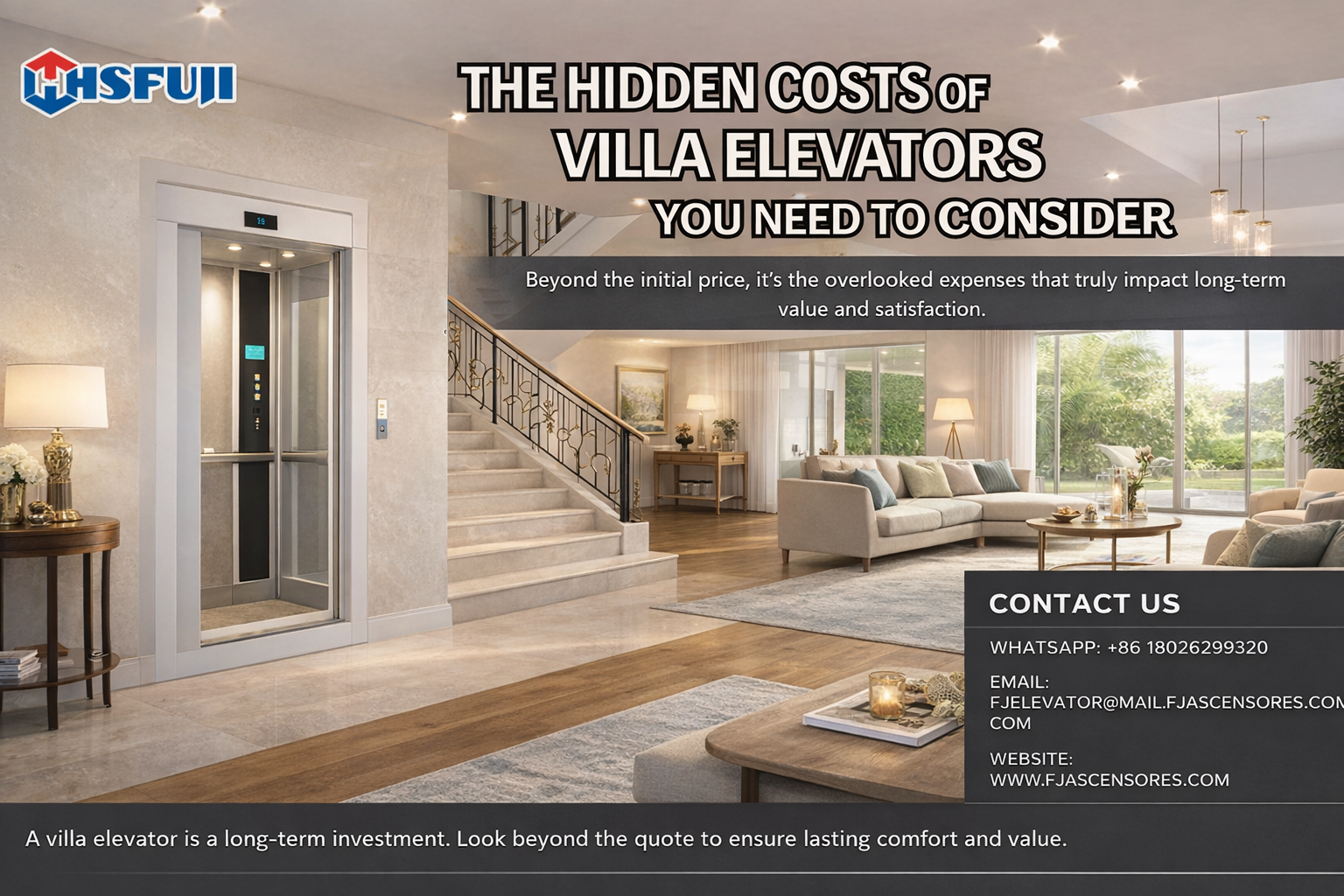
When choosing a villa elevator, many homeowners focus heavily on comparing prices.
However, what truly determines long-term value is often not the number shown on the quotation, but the costs that are not clearly stated at the beginning.
These hidden costs are rarely dramatic at first, yet they tend to accumulate quietly over time.
1. Poor Space Planning Amplifies Costs During Installation
A villa elevator is not a standard household appliance—it is a system that must work in harmony with the building structure.
Without proper early-stage planning, common issues include:
Repeated adjustments to shaft dimensions
Unnecessary structural modifications
Installation delays and rework
These problems increase not only construction expenses but also disrupt the overall spatial integrity of the home.
A well-designed villa elevator solution addresses space, structure, and system integration from the very beginning, rather than fixing problems later on site.
2. “Lower Prices” Often Shift Costs to the Later Stages
Some quotations appear attractive because they cover only the elevator equipment itself.
In practice, the following items are frequently charged separately:
On-site installation and commissioning
System tuning and performance optimization
Additional technical support
As these costs gradually surface, the total investment may exceed the original budget.
A transparent, integrated solution provides better control over the real cost of ownership.
3. System Stability Determines Long-Term Maintenance Costs
Although villa elevators operate at lower traffic volumes than commercial systems, they demand higher standards of comfort, reliability, and consistency.
Poor system design often leads to:
More frequent maintenance
Higher replacement rates for key components
Ongoing operational interruptions
A residential-focused elevator system should aim for long-term stability with minimal intervention, rather than relying on frequent servicing to remain functional.
4. Energy Consumption and Noise Are Daily Costs Often Overlooked
During the purchasing stage, few homeowners pay attention to:
Long-term energy consumption
Operational noise and vibration
Yet these factors have a direct impact on everyday living.
Energy-efficient drive systems and quiet operation are not optional upgrades—they are essential elements of residential comfort.
5. Excessive Customization Can Become a Future Burden
Interior customization should enhance spatial harmony, not create isolated design features.
Overly complex or trend-driven customization may result in:
Higher maintenance requirements
Difficulty adapting to future interior updates
Thoughtful customization prioritizes durability, simplicity, and long-term compatibility with the architectural space.
6. Lack of Forward Planning Leads to Reinvestment
Homes evolve, and so do family needs.
Elevator systems with limited flexibility may require:
Costly upgrades
Partial or full system replacement
Designing with future adaptability in mind helps reduce unnecessary reinvestment.
The Real Cost Is Whether It Remains the Right Choice Over Time
A villa elevator is not a short-term purchase—it is part of the home’s long-term infrastructure.
Evaluating a solution should go beyond the initial price and focus on:
Structural suitability
Long-term stability, quiet operation, and energy efficiency
Consistent comfort over years of use
When these factors are properly addressed from the start,
hidden costs naturally disappear—and the elevator becomes a lasting investment in both comfort and property value.
 How Can an Elevator Become “Invisible” in a Small Space?