Home
Home HSFUJI
  Jan 05,2026
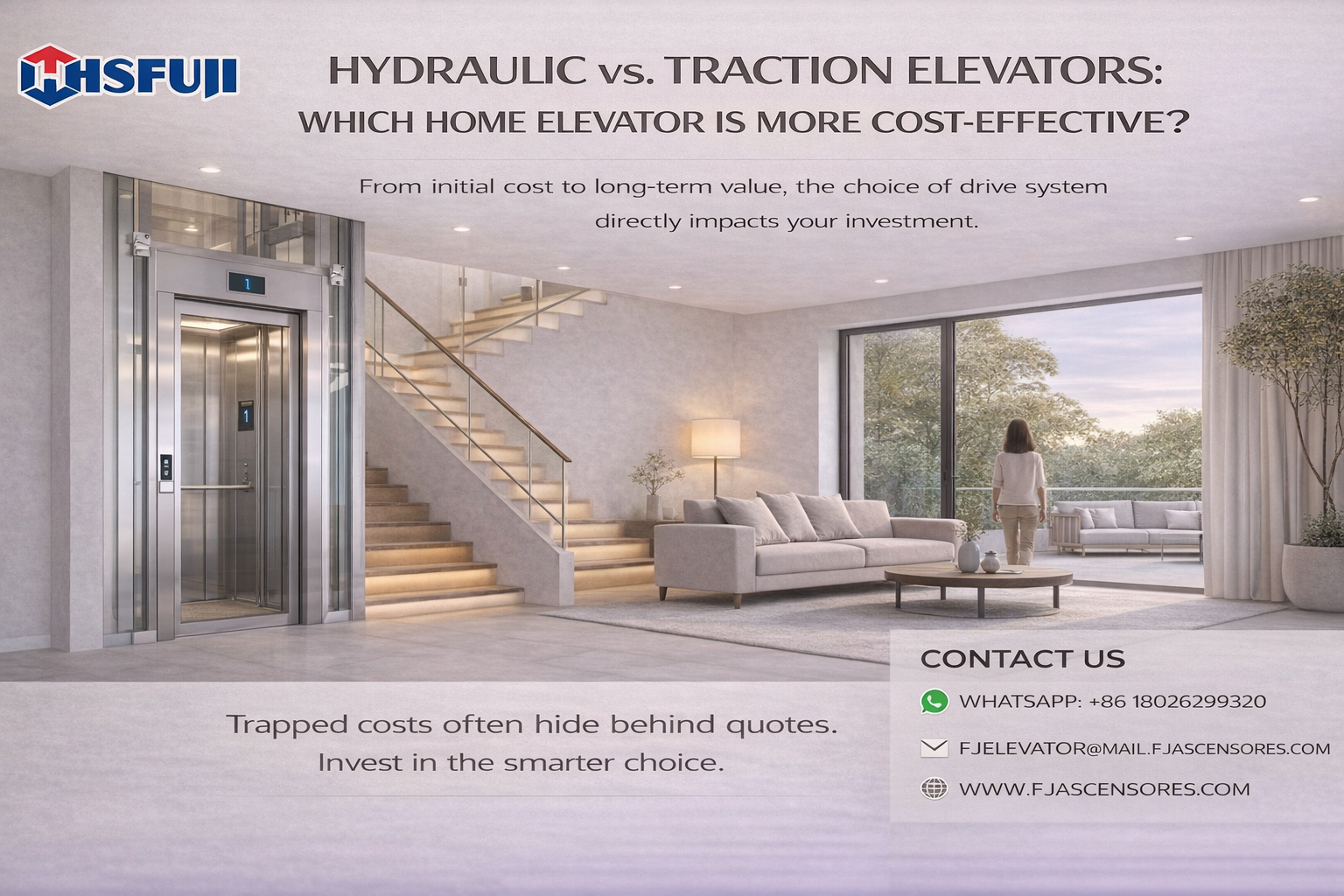
Hydraulic vs. Traction Elevators: Which Home Elevator Is More Cost-Effective?
When choosing a villa elevator or home elevator, the type of drive system plays a crucial role in determining price, user experience, and long-term operating costs. In today’s residential market, hydraulic elevators and traction elevators are the two most common solutions.
From a long-term usage and total investment perspective, which option truly offers better value?
1. Hydraulic Elevators: Simple Structure, Lower Initial Investment
Hydraulic home elevators operate by using a hydraulic pump to move a piston for vertical travel. Due to their straightforward structure, they were widely adopted in early villa projects.
Key advantages:
Relatively simple system structure
Lower initial equipment cost
Less demanding shaft precision requirements
Cost considerations:
Additional space is usually required for hydraulic equipment
Higher energy consumption, leading to increased long-term electricity costs
Ongoing maintenance expenses related to hydraulic oil replacement and servicing
For villas with fewer floors and tighter upfront budgets, hydraulic elevators can be attractive at the initial stage. However, their long-term operating costs should be carefully evaluated.
2. Traction Elevators: Mature Technology with Better Long-Term Economy
Traction home elevators operate through steel ropes or belts driven by an electric motor. They are currently the mainstream choice for high-end villa elevators and residential elevator projects.
Key advantages:
Smoother and quieter operation, ideal for residential environments
Higher energy efficiency and lower long-term operating costs
Longer maintenance intervals and stronger system stability
Easier to achieve machine-room-less or compact shaft designs
Cost performance:
Higher initial equipment and configuration cost
More predictable and controllable maintenance and energy expenses over time
From a full life-cycle perspective, traction elevators often outperform hydraulic systems in terms of comfort, stability, and overall economic efficiency.
3. Cost Is More Than Price: Long-Term Compatibility Matters
When selecting a villa elevator, the question should not simply be “Which option is cheaper?” True cost-effectiveness depends on a combination of factors, including:
Building structure and shaft conditions
Daily usage frequency
Noise control and ride comfort requirements
Ease of maintenance and service support
Long-term energy consumption
At HSFUJI ELEVATOR, villa elevator and home elevator solutions are designed with a strong focus on spatial planning and long-term usability—helping clients choose the most suitable drive system rather than simply pursuing the lowest initial price.
4. Hydraulic or Traction? The Right Choice Depends on Your Villa
Hydraulic elevators are more suitable for:
Villas with fewer floors
Projects with limited upfront budgets
Homes with sufficient space for equipment placement
Traction elevators are more suitable for:
Mid- to high-end villas and duplex residences
Families with higher expectations for quietness and ride comfort
Homeowners aiming to reduce long-term maintenance and energy costs
True Value Comes from the Right System Choice
Home elevators and villa elevators are not short-term purchases—they are long-term components of residential living.
From initial cost to years of maintenance, energy consumption, and daily comfort, the choice of drive system directly affects total investment.
At HSFUJI ELEVATOR, true cost-effectiveness is not about which drive system wins—but about selecting a solution that aligns perfectly with your space, lifestyle, and long-term living goals.
 The Hidden Costs of Villa Elevators Are Often Not Listed in the Quotation