Home
Home HSFUJI
  Dec 26,2025
Which Type of Elevator is Best for Home Use?
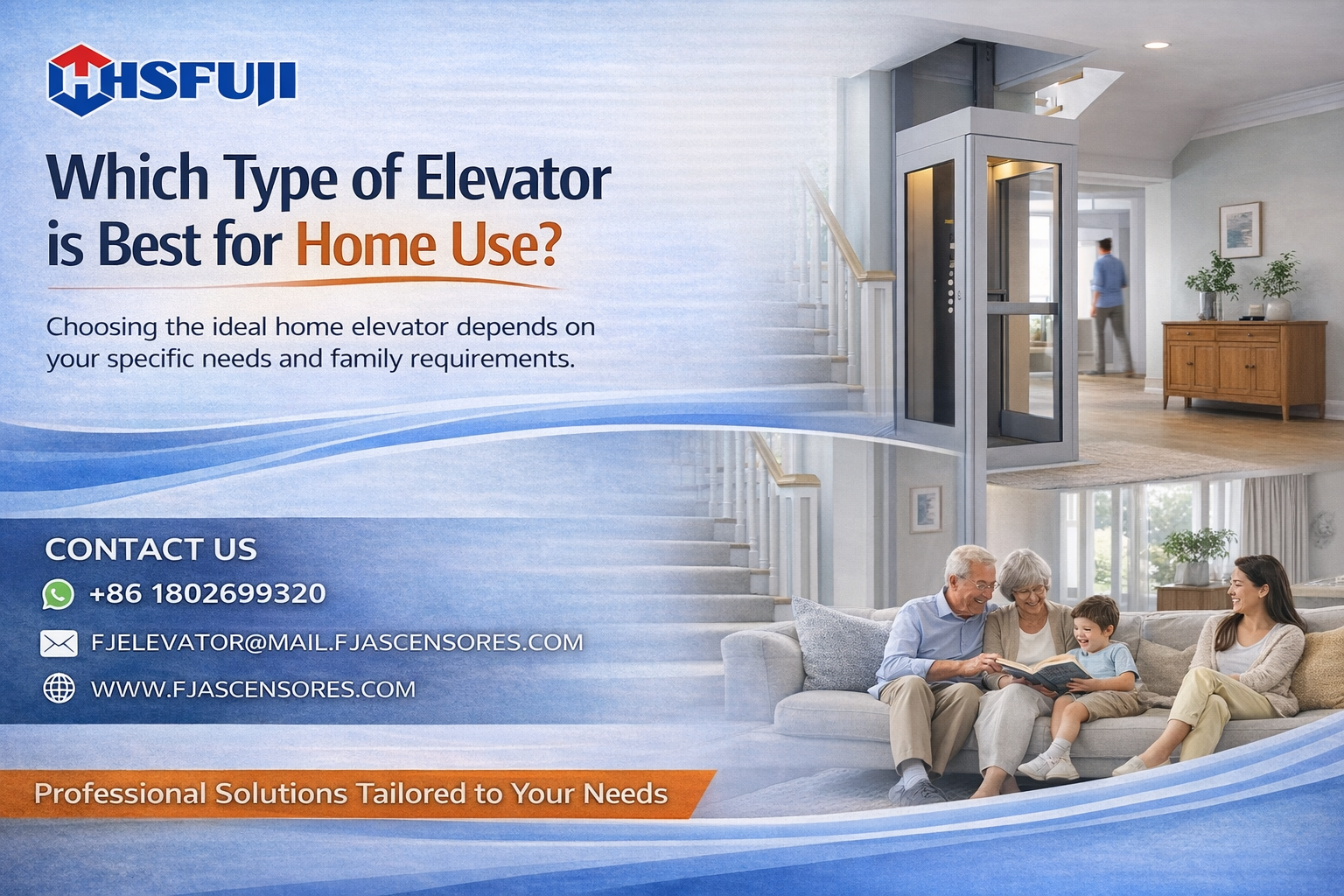
In modern homes, elevators have become an essential feature that enhances daily convenience and overall living quality. With the continuous development of technology, various types of home elevators have emerged on the market. So, which type of elevator is best suited for home use? Based on different needs, the most common types of home elevators are: traction, hydraulic, and screw-driven. Each of these types has its own characteristics, making them suitable for different family requirements.
Main Types of Home Elevators
Traction Home Elevators
Traction home elevators have a structure similar to commercial elevators, relying on steel ropes and counterweights to operate. They are suitable for multi-story villas or self-built homes, especially for families with frequent elevator use. Due to their mature technology, high operational efficiency, and good energy-saving performance, they are the most popular choice.
Hydraulic Home Elevators
Hydraulic elevators use hydraulic oil to move the elevator up and down, offering a smooth start with minimal vibration, making them ideal for families with elderly members or children. The advantage of hydraulic elevators lies in their comfort, but it is important to consider the machine room setup and long-term maintenance costs.
Screw-Driven Home Elevators
Screw-driven elevators are based on screw drive technology, with the main advantage of being compact and causing minimal disruption to the building structure. They are perfect for home renovations or areas with limited space. Additionally, screw-driven elevators are commonly used as scenic or platform elevators in high-end villas.
Which Elevator is Suitable for Your Home?
When choosing an elevator, it is essential to consider factors such as usage frequency, family structure, and available space. Here are some recommendations:
For homes with three or more floors and frequent use:
It is recommended to choose a small traction home elevator. It offers high efficiency, excellent energy-saving performance, and is particularly suitable for long-term use with mature technology and easy maintenance.
For families with elderly members or children:
Hydraulic or screw-driven elevators may be a good option. Hydraulic elevators provide a smooth start and better noise control, making them friendly for elderly and young users.
For home renovations or homes with limited space:
Screw-driven or platform elevators are more suitable, especially because they can be designed with no pit or a shallow pit, reducing the need for major renovations.
 How Do Regular Inspections Help Prevent Elevator Accidents?