Home
Home HSFUJI
  Jun 23,2025
What Types of Villa Elevators Are There?
As living standards continue to rise, villa elevators (also known as home elevators) have become increasingly popular among high-end residential users. Whether it's to enhance everyday comfort or provide safer, more convenient mobility for elderly family members and children, installing a suitable home elevator has become an essential element of modern villa design.
So, what types of villa elevators are available? And which options are best suited to different home environments?
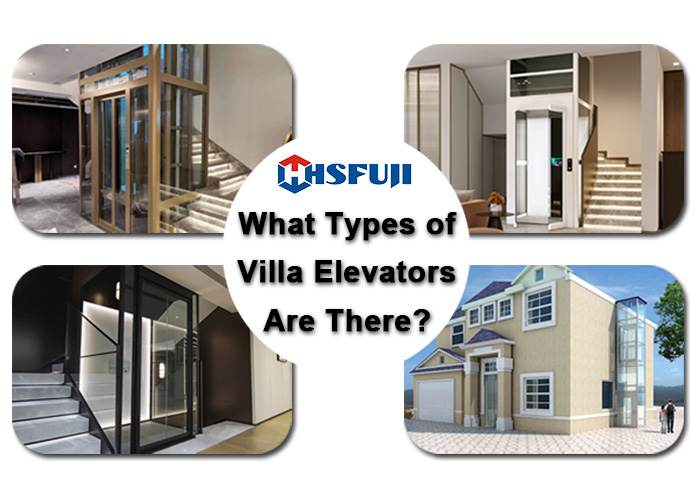
I. Classification by Drive System
1. Traction Elevators
Traction elevators are currently the most widely used type of home elevator. They operate similarly to commercial elevators, utilizing friction between the traction wheel and steel ropes to move the cabin up and down.
Advantages: Smooth operation, high ride comfort, energy-efficient, eco-friendly
Disadvantages: Typically requires a pit and machine room (though machine-room-less options are now available)
Ideal for: Families that prioritize a quiet and comfortable ride experience
2. Hydraulic Elevators
These elevators use a hydraulic system that pushes a piston to raise and lower the cabin. The structure is relatively simple and compact.
Advantages: Strong load capacity, can be installed without a shaft, suitable for limited spaces
Disadvantages: Slower speed, potential for oil leakage, higher maintenance costs
Ideal for: Renovated homes or users with lower speed requirements
3. Screw-Drive Elevators
Screw-drive elevators operate through the rotation of a screw and nut assembly, eliminating the need for counterweights, shafts, or pits.
Advantages: High safety, no machine room required, compact footprint
Disadvantages: Slower speed, relatively higher cost
Ideal for: Users focused on safety and space efficiency
4. Belt-Driven Elevators
These are a new generation of machine-room-less elevators that use high-strength composite belts for quieter and smoother operation.
Advantages: Energy-efficient, low-noise, flexible design, easy maintenance
Disadvantages: Slightly higher initial investment
Ideal for: Villa owners seeking both aesthetic appeal and high performance
II. Classification by Shaft Structure
1. Masonry Shaft
A traditional construction method that offers strong structural integrity and lower cost but requires a longer build time.
2. Steel Structure Shaft
Features a modern appearance and faster construction. Suitable for both indoor and outdoor installations—ideal for retrofit projects.
3. Glass Shaft
Constructed with full or partial glass for a transparent, stylish look that enhances the home's overall design.
4. Shaftless Integrated Structure
Uses an all-in-one cabin design that requires no civil shaft, saving significant space—perfect for older buildings or compact interiors.
III. Functional & Aesthetic Categories
Panoramic Home Elevators: Featuring glass cabins that provide a premium visual experience while enhancing the home’s aesthetics
Barrier-Free Elevators: Designed for people with limited mobility; wheelchair accessible and user-friendly
Hidden Home Elevators: Seamlessly blend into the surrounding wall, offering a minimalist look with strong design appeal
Choosing the right villa elevator not only improves daily convenience and comfort but also reflects thoughtful care for your family's well-being. Each drive system and structural type has its own strengths and considerations. We recommend evaluating factors such as your home's layout, available space, user needs, and budget to determine the most suitable solution for your lifestyle.
If you need personalized recommendations or a custom elevator solution, feel free to contact us. HSFUJI is here to provide professional, tailor-made villa elevator solutions that meet your needs.
 Can a Home Elevator Be Installed in an Old House?