Home
Home HSFUJI
  Mar 19,2026
Is a Cheap Home Elevator Really Worth the Risk?
When choosing a home elevator, many homeowners instinctively focus on price. Elevators that look similar can come with significantly different prices—some much lower than others. At this point, an important question arises: is choosing the cheapest option truly cost-effective, or does it introduce long-term risks?
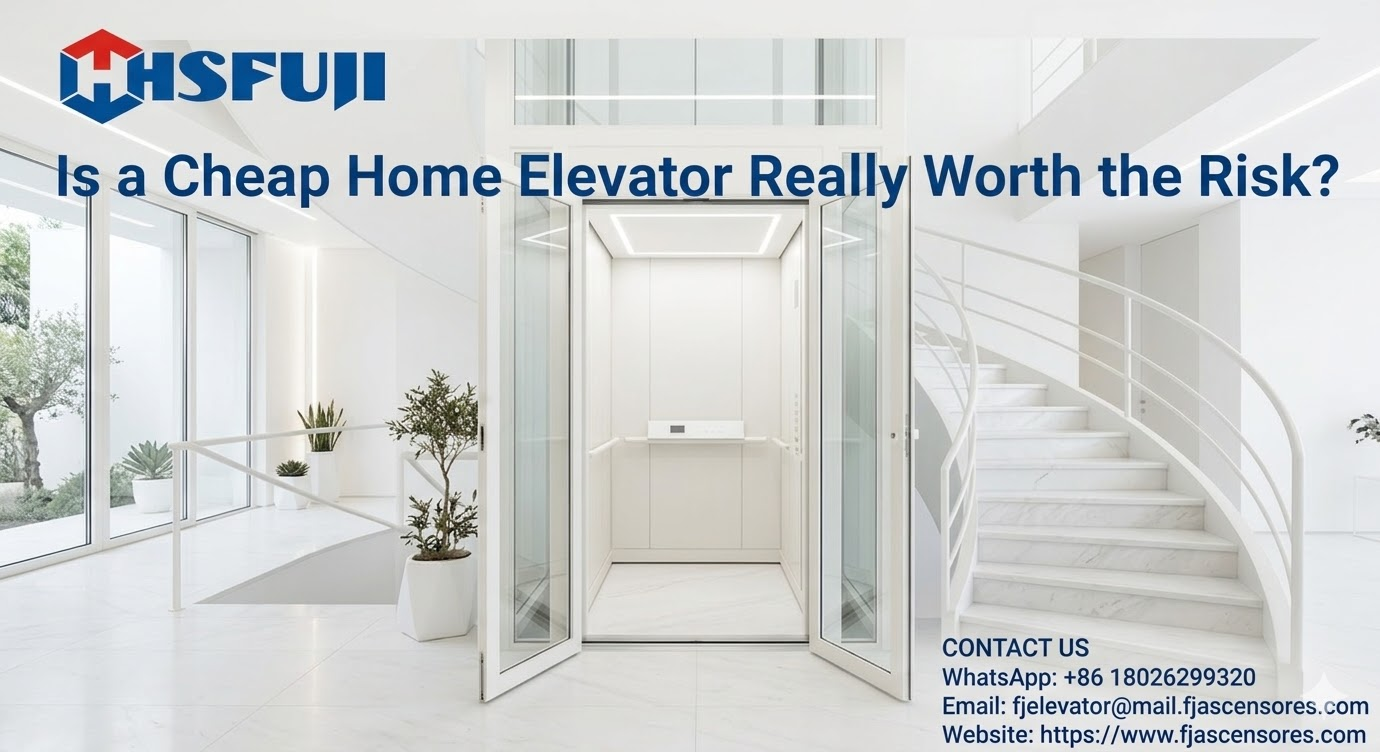
The Hidden Costs Behind a Low Price
On the surface, a cheap home elevator may not look very different. However, the price gap often comes from internal configurations.
To reduce costs, some products may simplify or downgrade key elements such as the drive system, safety components, and structural materials. While these aspects are not always visible, they directly impact the elevator’s stability and service life.
A home elevator is not just a decorative feature—it is a mechanical system used every day. Money saved upfront may later translate into maintenance issues, failures, or even higher risks.
Safety Should Never Be Compromised
A well-designed home elevator system typically includes multiple safety protections, such as emergency braking systems, automatic rescue devices (ARD), door interlocks, and smart control systems.
In lower-priced solutions, some of these features may be simplified or omitted. While this may not be noticeable in the short term, potential risks tend to increase over time with regular use.
For families with children or elderly members, an elevator is not just about convenience—it is an essential part of daily safety.
Installation and Customization Define the Experience
A home elevator is not a standardized product; it is a customized solution based on the building.
Shaft size, floor height, and spatial layout all influence the final result. Some low-cost quotations may simplify the design process or reduce installation standards to cut costs, which can lead to issues such as excessive noise, inconsistent performance, or poor spatial fit.
A truly well-designed elevator integrates seamlessly into the home—not only visually, but functionally.
Maintenance Is the Real Long-Term Cost
Many users focus only on the purchase price while overlooking long-term maintenance.
Low-cost suppliers may lack stable after-sales service, spare parts availability, or technical support. When problems arise, this can result in longer repair times, higher costs, or even difficulty sourcing compatible parts.
In contrast, a more reliable system may require a slightly higher initial investment but offers lower maintenance costs and greater peace of mind over time.
What You’re Really Paying For
The price of a home elevator reflects more than just the equipment itself. It includes engineering expertise, safety standards, installation quality, and long-term service.
Instead of asking, “Why is this one cheaper?”, it is more valuable to ask, “What has been reduced to make it cheaper?”
Rational Choices Matter More Than Low Prices
A home elevator is a long-term investment. It affects not only convenience, but also quality of life and safety.
Choosing a reliable solution means enjoying stable performance for years—without constant concerns about breakdowns or safety risks.
If you are evaluating the right elevator solution for your home, feel free to explore more professional options:
https://www.fjascensores.com/
Email: fjelevator@mail.fjascensores.com
WhatsApp: +86 180 2629 9320
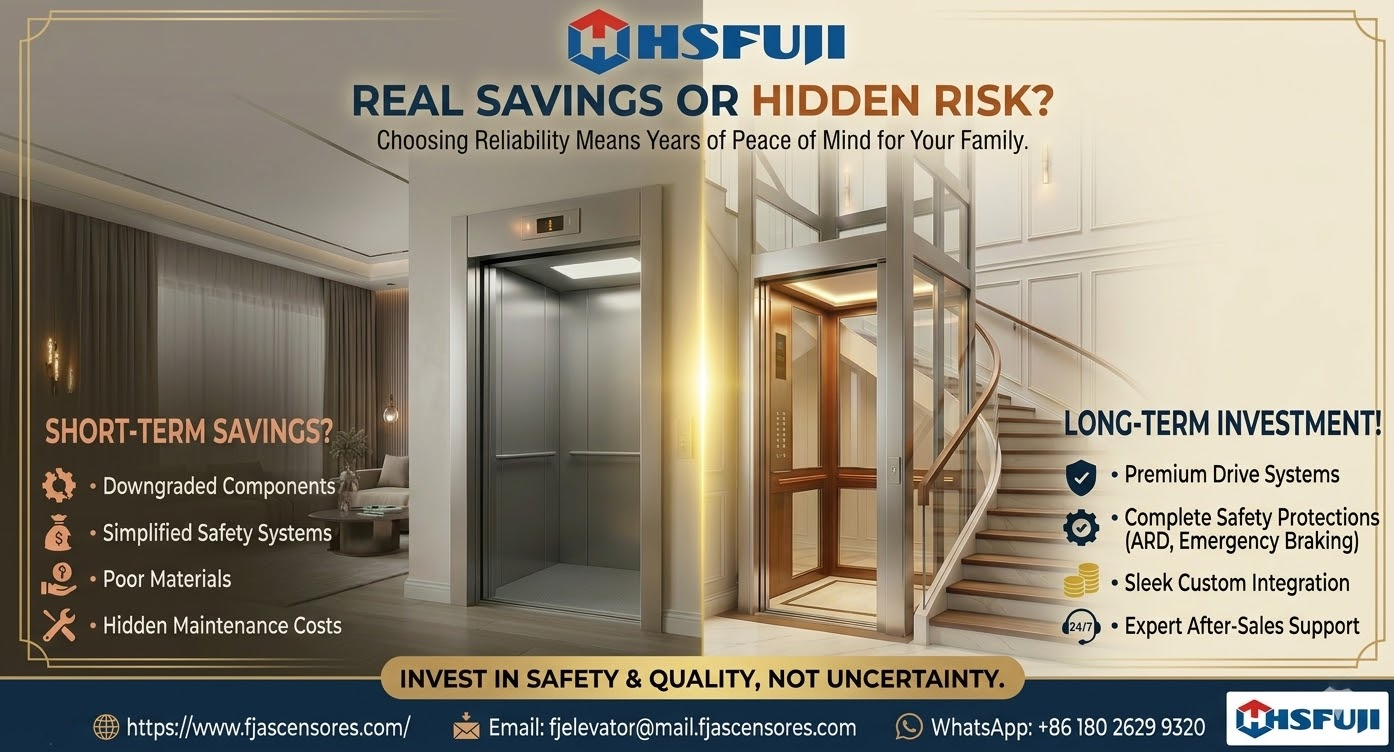
 Why is there such a large difference in home elevator pricing?