Home
Home HSFUJI
  Feb 09,2026
Home Elevators vs. Conventional Elevators
Understanding the Real Differences for Residential Use
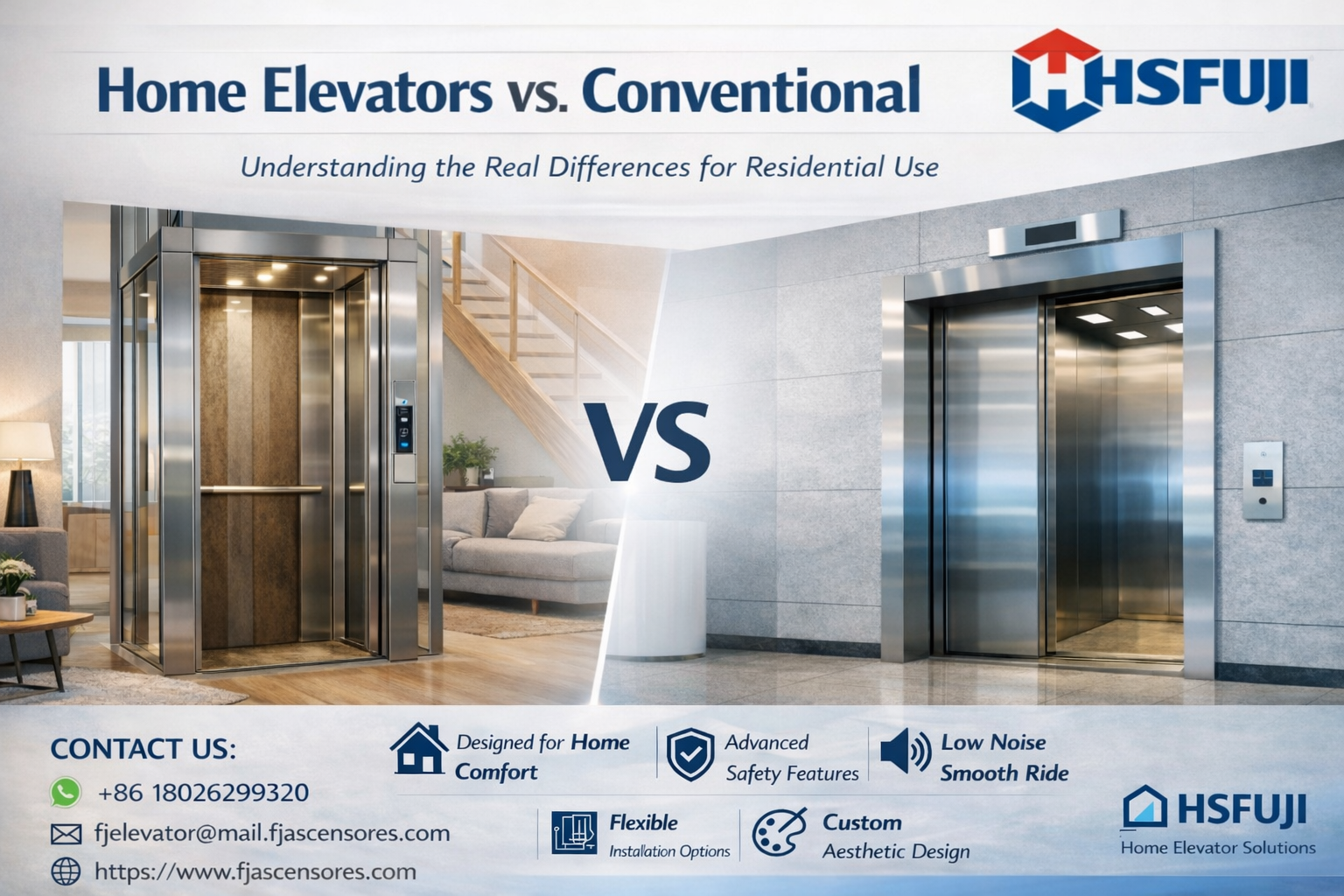
As multi-level homes, villas, and duplex residences become increasingly common, elevators are no longer limited to commercial buildings. More homeowners are now considering elevators as part of daily residential life. However, many people still assume that a home elevator is simply a smaller version of a conventional commercial elevator. In reality, the two differ fundamentally in design philosophy, system configuration, and long-term use expectations.
Different Usage Scenarios Shape Different Design Priorities
Conventional elevators are designed for public spaces such as office buildings, shopping malls, and hotels. Their primary focus is high load capacity, frequent operation, and fast passenger flow under standardized conditions. Efficiency and durability under heavy daily use are the main objectives.
Home elevators, on the other hand, are designed specifically for private residential environments. They prioritize comfort, safety for family members of all ages, and compatibility with living spaces. Rather than serving hundreds of users each day, a home elevator is meant to quietly support daily routines over many years.
Safety Systems Are Tailored for Residential Living
While commercial elevators comply with strict public safety regulations, home elevators emphasize layered protection and preventive safety design. Residential elevators typically operate at lower speeds, reducing mechanical stress and potential risk during operation. This slower, smoother movement is especially important for elderly users and children.
In addition, home elevators often include multiple safety mechanisms such as emergency lowering, power-failure rescue systems, and user-friendly controls. These features are not simply optional upgrades but essential components of a residential safety strategy. The goal is to provide peace of mind rather than handle large-scale passenger traffic.
Noise Control and Ride Comfort Matter More at Home
Noise tolerance in commercial buildings is naturally higher, as elevators are usually located away from living or resting areas. In a home, however, elevators may be installed near bedrooms, living rooms, or study spaces. This makes quiet operation a critical factor in overall comfort.
Well-designed home elevators focus on smooth drive systems, vibration isolation, and sound-dampening structures. When properly selected and professionally installed, their operating noise is comparable to soft conversation or background music. This allows the elevator to function without disrupting daily life.
Greater Flexibility in Space and Installation
Commercial elevators usually require standardized shafts, machine rooms, and predefined structural conditions. These requirements can limit installation options and increase construction complexity. Home elevators are far more flexible in this regard, especially when adapting to existing residential structures.
Modern home elevator solutions can accommodate compact shafts, machine-room-less designs, and customized layouts. This flexibility makes it possible to install elevators in both new constructions and renovation projects. For many homeowners, this adaptability is a decisive advantage.
Design and Customization Reflect Residential Aesthetics
In commercial environments, elevators are primarily functional elements with limited customization. In contrast, a home elevator is part of the interior design and architectural expression of a residence. Visual harmony is just as important as technical performance.
Home elevators offer a wide range of customization options, including cabin materials, colors, lighting, and glass structures. When thoughtfully designed, the elevator integrates naturally into the home rather than standing out as an industrial element. It becomes a functional extension of the living space.
Why a Dedicated Home Elevator Solution Matters
A home elevator is not a single piece of equipment but a complete system that combines design, engineering, installation, and long-term service. Treating it like a standard commercial product often leads to compromises in comfort and usability. A professional residential solution considers the house structure, family composition, and future living needs from the beginning.
With HSFUJI home elevator solutions, every project is approached as a customized residential system rather than a standardized installation. From early planning to final commissioning, the focus remains on safety, comfort, and seamless integration into daily home life. This system-based approach ensures reliable performance over the long term.
More Than Vertical Transportation
Choosing a home elevator is not simply about moving between floors. It is about improving accessibility, supporting family members at different life stages, and enhancing the overall quality of residential living. Understanding the difference between home elevators and conventional elevators helps homeowners make informed, future-oriented decisions.
For more insights into home elevator systems and customized residential solutions, please visit: https://www.fjascensores.com
 Are Home Elevators Noisy? A Clear Look from Real-World Use